
If you’re wondering why I have been posting incessantly these days, it’s because I am wrapping up my summer course from the Changing Education department, called “Neuroscientific Approach to Artistic and Practical Subjects.” This fascinating course explores the neuroscience of arts, crafts, music, and movement, areas that hold particular interest for me. The blog posts are my personal reflections on the topics discussed in the course.
The course instructed us to focus on specific educational segment. While some classmates focused on early childhood, primary, or higher education, I chose to focus on adult lifelong learning with a particular interest in the notion of aging. As a parent (and as someone approaching 40!), I found this perspective most relevant to me.
Technology also plays a role in my explorations. Health wearable devices and neurotech are increasingly common, but it’s still unclear how they can be utilized as personal research tools to help us understand our bodies, brains, health, and overall well-being.
One of my recent investigations was understanding how my physical activities correlate with sleep quality, something I looked into with my Oura Ring data.
I also conducted experiments using Mendi fNIRS to examine the level of PFC oxygenation due to movement and to study my daughter’s brain while she engaged in arts & music.
The latest post of mine detailed how I used MUSE EEG to estimate my peak alpha frequency (PAF), a marker often used to indicate aging, as humans’ PAF tends to decline as they age.
All these insights lead me to reflect on the power of movement, arts, crafts, music, and intellectual pursuits in promoting healthy aging. This is where the concept of flow comes in, defined as the state where task demands meet your skills, leading to optimal engagement without boredom or stress.
I remember that not so long ago, I attended a talk by Dr. Andrei Rodionov from the HiPerCog research group on the connection between learning and health. Titled “Networks, synapses, brains: a connection between learning and health,” Andrei’s talk was a fascinating attempt to connect the flow state with neuroplasticity and lifelong learning.
There’s strong evidence linking educational attainment with increased life expectancy and a lower risk of dementia and Alzheimer’s disease (Maccora et al., 2020). Hippocampal volume tends to increase as the educational level increases (Wang et al., 2022). Each year of education is associated with a reduced risk of Alzheimer’s disease by 8% and a reduced risk of any dementia by 7% (Maccora et al., 2020). However, some critics argue that the measurements are inconsistent and overlook the fact that learning happens across the lifespan, not just in formal education settings (Maccora et al., 2020).
Andrei’s talk expanded the definition of education and shifted the focus to lifelong learning, exploring mechanisms that influence brain health. He discussed neuroplasticity and cognitive reserve, concepts tied to lifestyle choices like exercise, diet, sleep hygiene, education, learning habits, and social activities.
Neuroplasticity refers to the ability of neural networks in the brain to change through growth and reorganization. Such changes may include an increase in dendritic connections between neurons, new and stronger connections between neurons, and an increase in neurotrophic factors which promote cognitive functioning.
Cognitive reserve describes the brain’s capacity to maintain cognitive function despite the presence of natural brain changes associated with aging (Arenaza-Urquijo et al., 2015). It reflects how agile your brain is in pulling in capacities to cope with challenges. Thus, lifestyle choices that promote neuroplasticity will also increase one’s cognitive reserve.
Andrei also explained how certain types of learning, especially those that induce flow, can promote neuroplasticity. Flow state, characterized by complete focus and heightened engagement, increases activity in the multiple-demand network and reduces activity in the default mode network (Peifer & Engeser, 2021). Flow engages brain regions involved in challenging cognitive tasks and correlates with synchrony in areas connected to reward and cognitive control (Peifer & Engeser, 2021).
There are differences between stressed and non-stressed arousals. Flow state involves non-stressed arousal that induces moderate levels of catecholamine release, which strengthens the dorsolateral prefrontal cortex, weakens the amygdala, and reduces tonic Locus Coeruleus firing (Arnsten, 2015). Instead of stress, the flow state promotes the feeling of alertness, safety, and interest.
He also emphasized the role of intrinsic motivation in inducing a flow state. It is an important factor that can sustain intellectual curiosity crucial for lifelong learning.
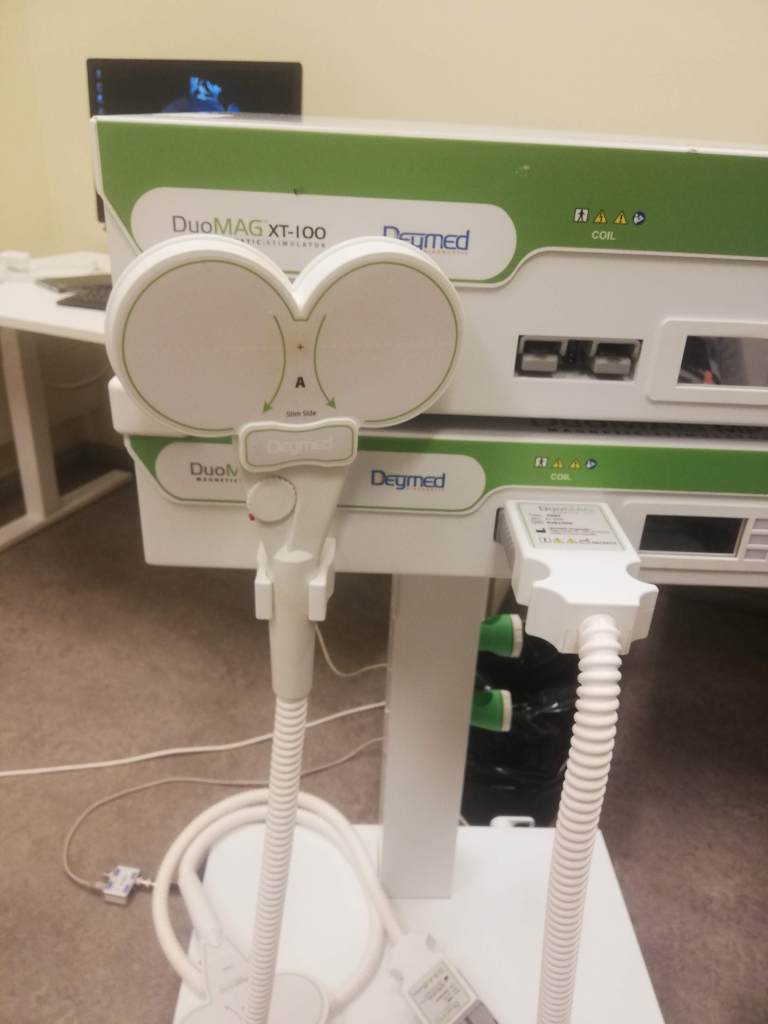
Andrei concluded his talk with examples of how brain stimulation with TMS (Transcranial Magnetic Stimulation) can induce neuroplasticity in patients with neuronal injuries. Though the use of this technology to assist with healthy aging is still being explored, the insights provided were valuable. As a tech enthusiast myself, I am curious how this brain stimulation technology will unfold in the near future.
So, this is how I draw a common thread between my takeaway from Andrei’s talk and my reflections on the course:
To age gracefully, we need to regularly engage in flow-inducing activities like sports, music, arts, crafts, and various intellectual pursuits. Flow not only enhances the joy of engagement but can also promote neuroplasticity, a vital aspect of building cognitive reserve as we age.
The intersection of neuroscience, arts, crafts, music, movement, and technology provides an exciting frontier for personal health and well-being, and I look forward to keep exploring these themes.
References
Arenaza-Urquijo, E. M., Wirth, M., & Chételat, G. (2015). Cognitive reserve and lifestyle: Moving towards preclinical Alzheimer’s disease. Frontiers in Aging Neuroscience, 7, 134. https://doi.org/10.3389/fnagi.2015.00134
Arnsten, A. F. T. (2015). Stress weakens prefrontal networks: Molecular insults to higher cognition. Nature Neuroscience, 18(10), Article 10. https://doi.org/10.1038/nn.4087
Maccora, J., Peters, R., & Anstey, K. J. (2020). What does (low) education mean in terms of dementia risk? A systematic review and meta-analysis highlighting inconsistency in measuring and operationalising education. SSM – Population Health, 12, 100654. https://doi.org/10.1016/j.ssmph.2020.100654
Peifer, C., & Engeser, S. (Eds.). (2021). Advances in Flow Research. Springer International Publishing. https://doi.org/10.1007/978-3-030-53468-4
Wang, Y., Wang, S., Zhu, W., Liang, N., Zhang, C., Pei, Y., Wang, Q., Li, S., & Shi, J. (2022). Reading activities compensate for low education-related cognitive deficits. Alzheimer’s Research & Therapy, 14(1), 156. https://doi.org/10.1186/s13195-022-01098-1
 livalearning