
My daughter loves doing arts, crafts, music, and storytelling. Intrigued by her enthusiasm, I became curious to explore what happens in her brain as she engages in them. Specifically, I wanted to test the Mendi fNIRS, a wearable device that measures blood oxygenation in the prefrontal cortex area.
fNIRS, or functional near-infrared spectroscopy, is a non-invasive technique that works by using infrared light to measure cortical activity. It shines infrared light on the skull, allowing it to detect changes in blood oxygenation, which may be an indicator of increased energy needs due to heightened neuronal activity.
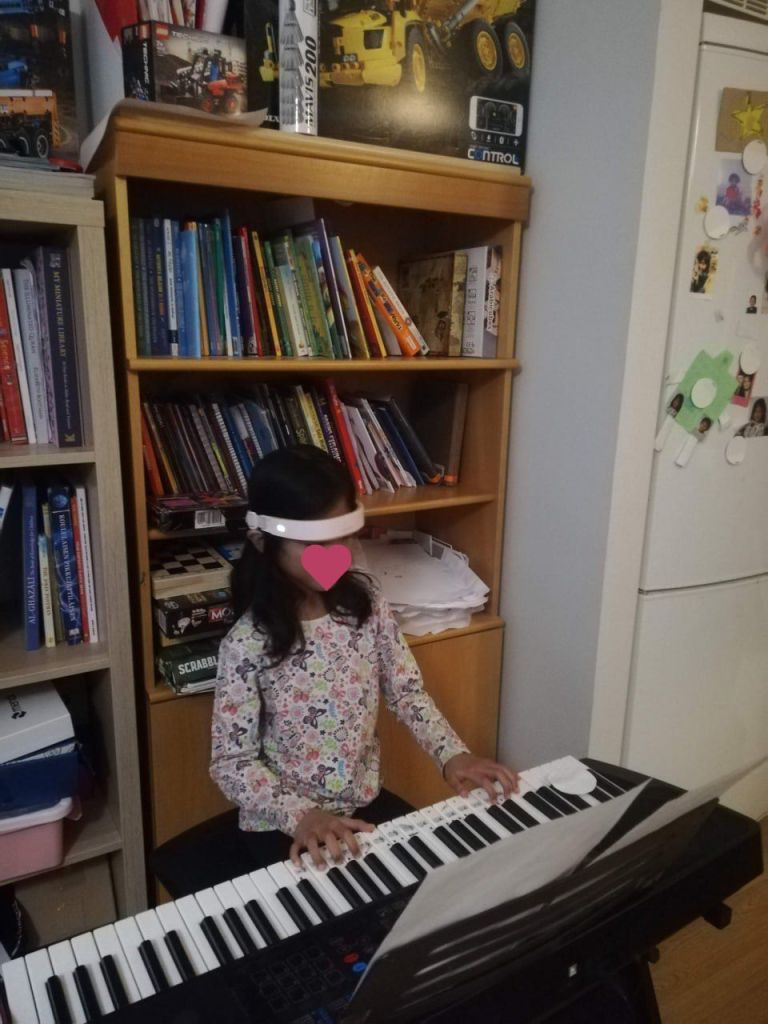
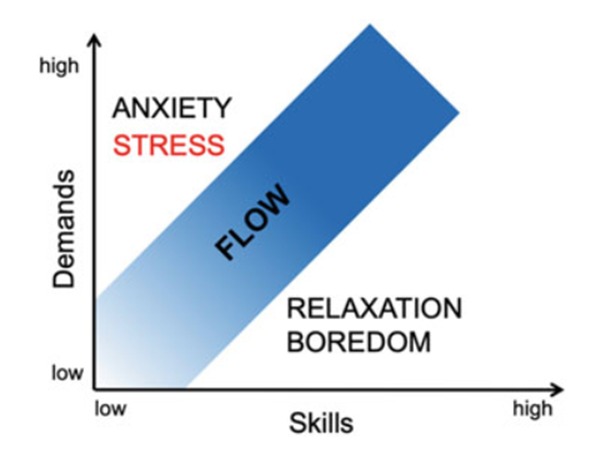
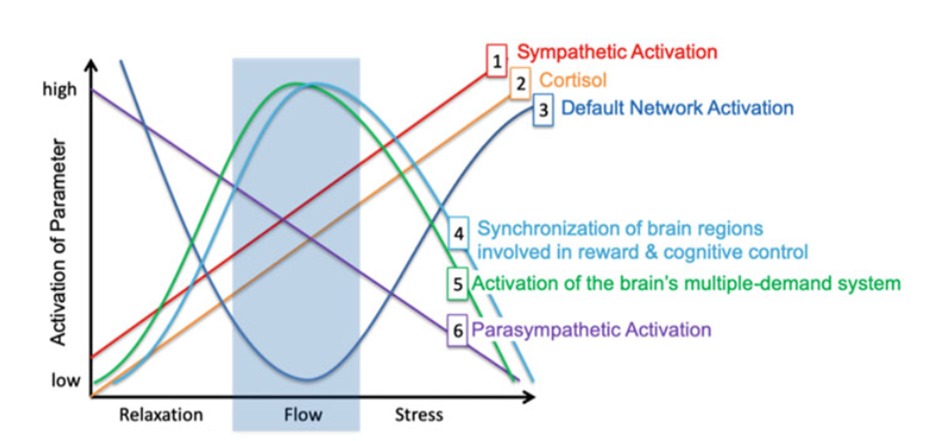
I aimed to determine which of her favourite activities activates her prefrontal cortex the most. An increase in this activity might signal engagement, potentially leading to a “flow state” where you are fully immersed in a task. To reach this state, it’s essential to find the “Goldilocks zone” – a perfect balance of arousal, neither too low nor too high. This optimal area between boredom and stress can be hard to achieve though…
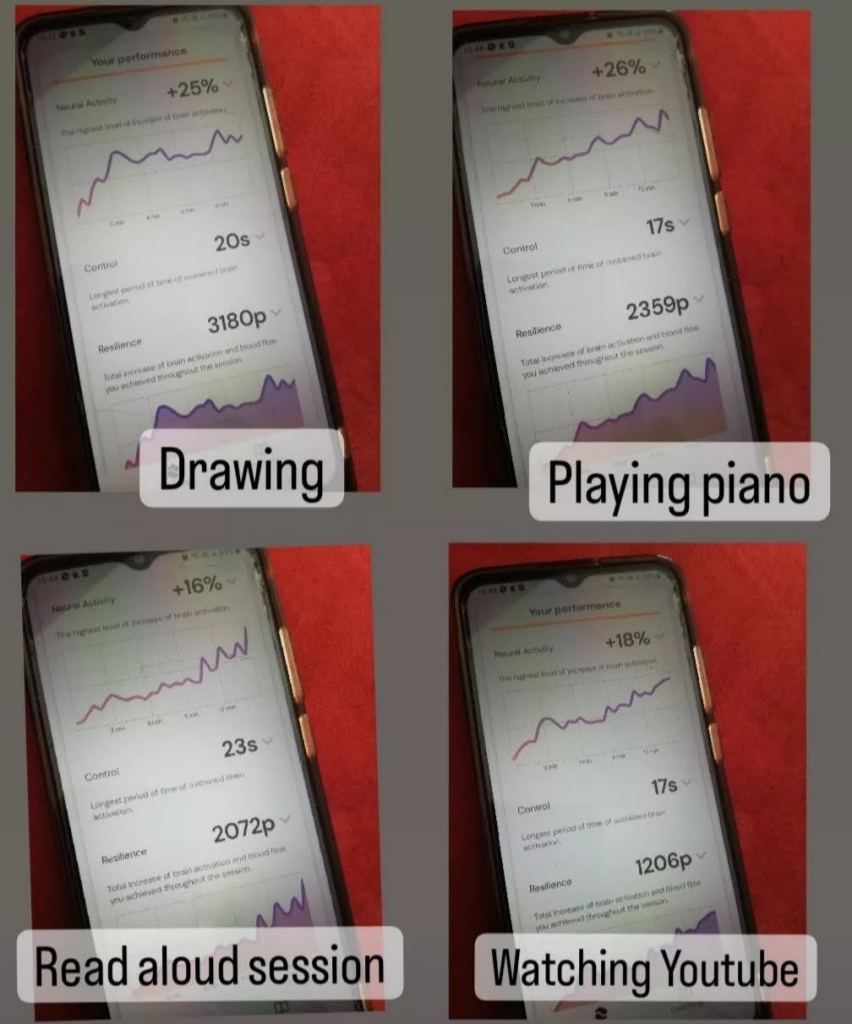
I compared her Mendi Resilience Score while she was engaged in various activities: free drawing, playing the piano, and a read-aloud session. For a baseline comparison, I also measured her score while she was watching a YouTube video. Although she enjoys watching YouTube, I assumed it to be a more passive task that might not significantly increase oxygen flow to the prefrontal cortex.
Each activity lasted for 10 minutes. My daughter did not particularly enjoy wearing the headband, so I limited the duration and took only a single measurement for each activity. The data should be considered anecdotal.
Findings:
This fun home experiment provided a glimpse into what happens inside the brain during different activities. Of course, a better experimental design would be needed for a more scientific approach.
Here’s the gathered Mendi Resilience Score data, along with my daughter’s enjoyment rankings:

Interestingly, the enjoyment ranking aligned with the Resilience Score ranking. Drawing was the most enjoyable activity, achieving the highest Resilience Score, followed by the piano, read-aloud session, and YouTube watching.
An important observation is how passively watching YouTube resulted in the lowest Resilience Score. It was not challenging enough to stimulate high oxygen flow to the prefrontal cortex.
The current trend among children is heavy passive media consumption. Although it may seem enjoyable for them, it does not necessarily provide the best mental exercise. This could be likened to “cheap dopamine,” similar to how we enjoy “simple carbs” because they’re fulfilling but not necessarily healthy. Just as we need complex carbohydrates full of fibres for a healthier lifestyle, children’s developing brains require both physical and mental activities that are challenging enough to attract more oxygen flowing.
Oxygen carries essential nutrients for the brain. Children should not be glued to screens all day, merely watching videos passively. To promote neuroplasticity, we must ensure that sufficient oxygen flows to the brain. Engaging children in their favourite arts, crafts, or musical activities may be a fruitful way to encourage this much-needed flow (Huotilainen et al., 2018).
References:
Huotilainen, M., Rankanen, M., Groth, C., Seitamaa-hakkarainen, P., & Mäkelä, M. (2018). Why our brains love arts and crafts. Form Akademisk – Forskningstidsskrift for Design Og Designdidaktikk, 11. https://doi.org/10.7577/formakademisk.1908
Peifer, C., & Engeser, S. (Eds.). (2021). Advances in Flow Research. Springer International Publishing. https://doi.org/10.1007/978-3-030-53468-4
 livalearning