
This is what society tells you to do: You go to school, graduate, find work, build a career, start a family, then your life is perfect. But really, everyone’s timeline is different. Don’t let the norms dictate what’s best for you.
I will turn 40 in the next few months. Most people my age are already settled in their careers. Some work in companies, some teach at schools or universities, some are entrepreneurs, and some are devoted homemakers engaged in social activism. But here I am, going back to school, still trying to figure out what I want to do when I grow up. 😂
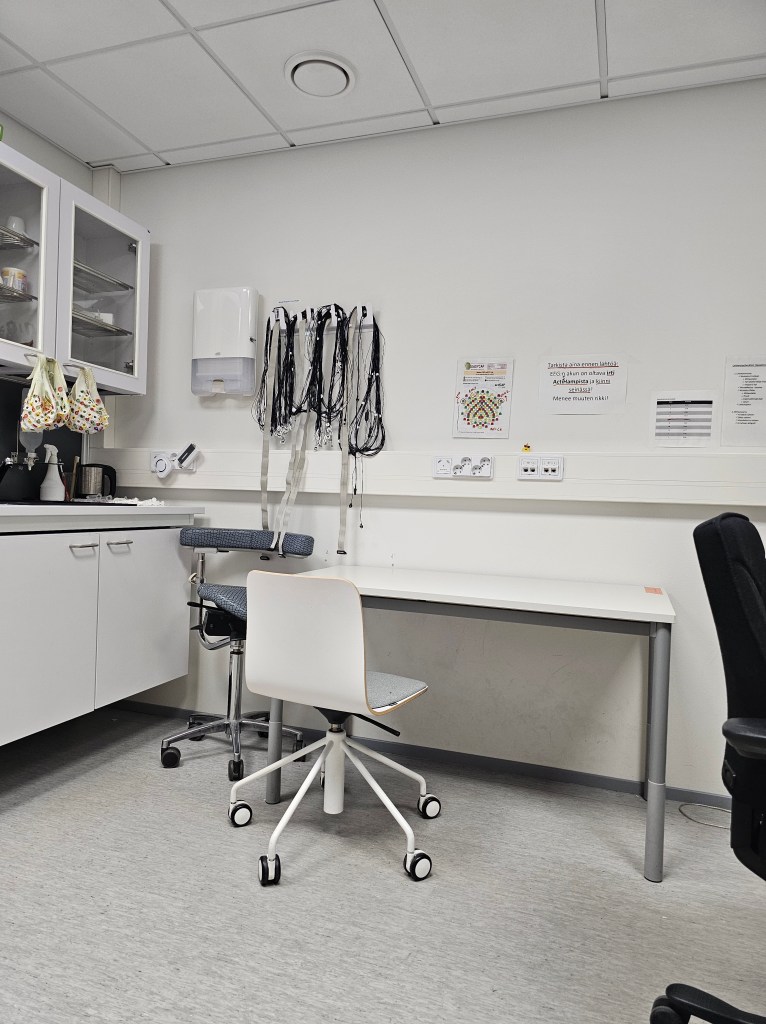
Doing a PhD as a mature student is, of course, not easy. You’re not as fit as you used to be when you were younger. You need your 8 hours of beauty sleep; otherwise, your brain doesn’t function. You can’t spend hours and hours studying without taking a break like you did back in college. Your eyes get tired easily from staring at your laptop monitor. Your body just aches if you spend too many hours running experiments in the lab.
You need to balance marriage, kids, and your PhD. While your friends hang out after classes, you need to rush home to prepare dinner. You can’t join a writing retreat to a cabin in the countryside because it’s hard to stay away from your family, even for a night.
A PhD is a lonely journey because no one really knows exactly what you’re doing. Your topic is so specifically your own. Your supervisor might be the only person who knows what it’s all about, and if you’re lucky, probably some of your lab mates.
Your PhD topic consumes your thoughts day and night, and that takes a toll on your relationships. The worst part is being surrounded by your loved ones at home but still feeling a tinge of inexplicable loneliness inside. The weird change in your psyche could breed some paranoia in your partner’s mind that you’re having an affair or some sort, while in fact, you’re just falling too deeply in love with your research.
I’m not saying that I’ve got everything all figured out right now, but six months into the program, I’ve learned some lessons. It’s not always an easy sail—of course, I’m still struggling to find the balance—but I think I’m getting better at navigating this new journey.
So here are the reasons why doing it all at 40 is the perfect timing for me. I don’t think I would be able to do it had I done it when I was in my 20s.
1. Mental Stability
Back in my early 20s, I was a lot more mentally unstable. Not to say that I’m all calm and collected now—people who know me well know exactly how frantic I can be at times. But trust me, the 20-something me was way worse. My mood was just so volatile. One moment I could be all cheery and happy, but I would suddenly burst into tears for no apparent reason. Meeting my husband and starting a family somehow grounded and balanced me more. I learned to regulate my emotions because I have people who rely on me. As I got older, I would say I’m better at centering myself compared to when I was younger. Had I done this in my 20s, without my family as my support system, I would have gone mental in the first three months.
2. Confidence
Doing a PhD, you will face moments that can shake your confidence: imposter syndrome, not knowing exactly what you’re doing in your research, and the sobering moment when you realize you know nothing about your science. The younger me was insecure and lacked confidence. You know, the typical insecurities you have as a young woman—from the way you look to whether you’re attractive enough to meet someone or smart enough to land a job. Somehow, as I got older, I cared less about what people think of me. I don’t need to prove anything to anyone anymore. Approaching my 40s now, I somehow became more confident as well. I know my worth, my strengths, and weaknesses better, and I can focus on what I can leverage. That’s probably why I managed to land this funded PhD position now. The 20-something me wouldn’t even dare to try applying. I remember feeling too insecure to apply for a master’s when I was around 25. I just felt too stupid to deserve pursuing a master’s degree.
3. Diverse Experiences
Unlike most other PhD students in their 20s, I’ve experienced both industry and academia. I know what it’s like to live in those worlds. If I had gone directly from bachelor’s to master’s and straight to a PhD, I would always question what it’s like to work in the industry. At this point in life, while doing a PhD, I don’t have to waste my time wondering about the other side.
I’ve tried different versions of myself: working in the industry while juggling a newborn with corporate life, being a stay-at-home mom and trailing wife raising two kids while moving to different places, going back to school and working on my first English essay at 34, an immigrant woman struggling to find jobs in Finland while not speaking the language. And now I’m doing a PhD, where it’s more like a full-time job here instead of being a student. You’re paid to do research.
I think I’ve learned a lot of life skills from my rather scattered experiences. They also enable me to do this one thing I’m probably pretty good at now: making connections between seemingly separate topics. I also somehow gained the skills to connect people together, one expert with another. In this interdisciplinary PhD project, I am more of a collaborator who connects different labs together, something I probably wouldn’t have been able to do as well in my 20s.
4. Financial Stability
At this stage of life, we are more financially stable than we were in our 20s. My husband is pretty comfortable with his work situation now compared to his 20s. As for me, although I’m fully funded for the next 4 years, I must admit, a PhD doesn’t pay much—probably just minimum wage, lol. Thankfully, now we no longer need to worry about a mortgage, car loan, or any other kinds of installments like we did in our early years of marriage. We do still need to pay rent here in Finland, as we don’t own any property here. But it just feels different when you’ve made a little investment when you were younger. Not worrying too much about money takes an extra burden away from your PhD stress. Back in my early 20s, money was definitely a huge issue.
5. Motherhood
If having kids is one of your goals in life, I’m entirely grateful that I’m doing a PhD when both of my kids are quite independent now. This year they’ll be 13 and 11. Everyone’s body is different. I know myself better. While for others, it is common to become mothers at a more mature age, especially now with the advances in healthcare, that’s definitely not me.
Pregnancy was hard on my frail and petite body. I had hyperemesis gravidarum in both of my pregnancies. During my first, while I still needed to commute to work, I had to take anti-emetics daily; otherwise, I couldn’t even get out of bed. Then I had to take a blood-thinning agent daily due to blood thickness issues that could make it hard to send nutrients to the placenta. It’s a miracle that my baby boy was born perfect. I know that it’s His best plan I did all that in my 20s instead of now.
I also had those 6 years of being a stay-at-home mom. Not gonna lie, some days I was so dead bored and uninspired, taking care of the kids and dealing with chores. But if I look back, I wouldn’t trade it for anything else. If you know a little about the science of the developing brain, the first five years of life are indeed an amazing phase. Being able to witness all those moments is such a privilege I need to be grateful for.
The timing couldn’t be more perfect (for my personal circumstances). My daughter is now at the age where she needs someone to look up to. Someone who looks like her, who speaks her language, doing brain science #womeninstem. If I could just be a little inspiration to her, that’s the only reason why I’m doing this.
6. Anti-Aging Benefits of Doing a PhD Later in Life
I don’t know how scientific it is. Maybe this is something I led myself to believe just because I’m in denial that I am a middle-aged woman now, lol.
But here’s the thing: there’s good research out there that correlates levels of education and life expectancy. Of course, it’s a complex interplay of many factors. Oftentimes, levels of education are just a proxy for socioeconomic status and access to education and healthcare. It makes sense that with such privileges, you get a better chance of prolonging your life expectancy.
But there’s also the concept of expanding your cognitive reserve. Cognitive reserve refers to your brain’s resilience in optimizing performance by different recruitment of brain networks or cognitive strategies. It helps explain why some people are more resilient to Alzheimer’s and dementia even though they experience the similarly inevitable physical aging in the brain. Lifelong learning definitely helps improve your cognitive reserve. It doesn’t have to be formal education, but doing a PhD with clear goals and demands might force you to have some discipline and form good learning habits.
You also get to hang out with people almost half your age. Somehow, I find that invigorating. Just listening to those young souls with hopes and dreams, anticipation (and anxiety) of what life may hold helps me remember what it was like to be young.
Here’s another. Might sound cheeky though. You know people with Asian heritage. There’s this thing called the Ahjumma effect. So before you turn 50, somehow Western people will find it hard to know your exact age. You could easily get away with hanging out with 20-somethings without people knowing you could actually be their mom. But then suddenly after 50, everything just goes downhill. You look 70 overnight, lol. So I have my last decade to enjoy the Ahjumma effect, and I’ll make the most of it. My goal in my 40s is now to be reasonably fit, mildly cute, but disgustingly overeducated.🤣🤣
Can Women Have It All?
I often reflect on the notion of “having it all.” It’s a question many women grapple with: Can we truly have it all? My answer is a resounding yes—with the whole village as our support system, it surely is possible, but not necessarily all at the same time. Every woman’s journey is unique, and it’s essential to recognize and respect our individual capacities and circumstances.
The idea of “having it all” is deeply personal and subjective. Some women seamlessly balance family life, advanced education, and a thriving career from a young age. For others, like me, the journey unfolds in unconventional stages, each period bringing its own set of priorities and challenges. Understanding and respecting your mental and emotional capacity is crucial. My path involved a significant career shift, a period dedicated to family, and a return to academia when the time was right for me. This phased approach allowed me to fully engage with each chapter of my life, making the most of the experiences each stage offered.
So, can women have it all? Absolutely. But remember, “all” doesn’t have to happen simultaneously. Embrace your unique journey, trust your instincts, and know that it’s never too late to reinvent yourself and pursue your dreams.
All in all, thus far, pursuing a PhD at almost 40 has been a rewarding and transformative experience for me (I’m only in my first year, though; let’s see what I think in the years to come, lol). It’s given me a new sense of purpose and has challenged me to balance my various roles in life more effectively (or at least I’m trying to). While it comes with its own set of struggles, the wisdom, experience, and resilience that come with age have equipped me to handle them better than I imagine my younger self could. So, if you’re considering a major life change later in life, don’t hesitate. It might just be the perfect time for you too.
 livalearning