
Many of us find it intriguing to hear stories about unfulfilled potential and underachievement in gifted youths who did not live up to their supposedly high abilities. Shattered dreams, broken promises – it’s hard not to ask why their childhood brilliance did not transform into adult eminence. One of the possible reasons is a familiar story: gifted adolescents and young adults become trapped in self-sabotaging behaviour and cease to follow through on their road to excellence.
This narrative revolves around two bright and gifted children: the musical prodigy Marc Yu, who made his Carnegie Hall debut at the age of 10, and the curious boy Richard “Ritty” Feynman, who playfully dabbled with science and maths since childhood. While Ritty grew up to be a physics Nobel laureate and one of the most revered scientists in modern history, Marc quickly disappeared from the limelight in his mid-adolescence. How could these two boys, both seemingly gifted and talented, end up with such different adult outcomes? What key lessons can we learn from their talent development journeys?
The Magic Mantra: Let the Children Play
“Ritty” Feynman once expressed that his engagement with science had begun early in his life through various playful means. Ritty’s father had a way of nurturing an inquisitive mind in a young child through simple everyday activities: reading books, exploring nature, and playing with puzzles. When Ritty was very young, his father would bring home colourful rectangular tiles for the little boy to arrange. He cleverly introduced him to patterns through play. Feynman once said that mathematics was essentially about looking for patterns. As he grew, his father instilled a love of reading in the family. He would sit him on his lap and read about dinosaurs from the Encyclopaedia Britannica. He would also take him out to explore nature. They would go for walks in the woods and discuss various interesting things they found. There is a famous story where they encountered a brown-throated thrush. Ritty’s father explained to him that the bird might be called differently in different foreign languages. However, knowing the bird’s name would not mean you know anything about the bird. His father was trying to teach him a lesson: a deeper understanding goes beyond the surface level of names or labels.
As a young child, Ritty was extremely curious. He once played with a wagon that had a railing around it. He had a ball in it and would pull the wagon. He noticed something peculiar about the way the ball moved. When he was pulling the wagon, the ball rolled to the back; when he stopped abruptly, the ball rolled to the front. He immediately asked his father why. His father explained that nobody really knew why that happened. People knew that moving things tended to keep moving, and things at rest tried to remain still. They called this the principle of inertia. However, knowing that such a phenomenon was called inertia did not necessarily mean that people understood the explanations behind the phenomenon.
Ritty also loved to tinker with electronics. He fiddled with the home radio and various gadgets. Ritty’s involvement with his home laboratory could be considered STEM deliberate play, as these playful activities required specific skills. He read books and manuals that gave him an idea of how to build electrical circuits. He wired his laboratory to the entire house’s electrical circuits so he could plug his earplug in and make announcements anywhere. One night his parents came home and opened the front door to a sudden loud noise. Ritty’s burglar alarm had worked. His parents were supportive; they never scolded him for experimenting with stuff around the house.
Meanwhile, Marc’s prodigious journey was characterised by a rapid plunge into the deliberate practice approach. Shortly after his initial exposure to the piano, Marc was determined to participate in intensive piano training. When he was three, he asked his mum, “May I become a concert pianist?” After his first piano lesson, he could memorise all the pieces in his piano book. In no time, he became obsessed with the piano, practising for four to five hours a day, sometimes more. At night, he often sneaked out of bed, playing the piano softly so he wouldn’t wake up his mum. At age five, he was determined to master the pieces he knew his idol Lang Lang had played at around his age. He also pushed himself to take up the cello, just like Yo-Yo Ma, another musical inspiration for him (although he would later abandon the cello to focus entirely on the piano). He soon joined the Pasadena Symphony and captivated the other symphony staff and audiences with his fervent performance.
Marc landed a scholarship at the L.A.’s Colburn School of Music at age six and got front-page coverage at the L.A. Times. Soon after, he was also awarded a $10.000 worth of fellowship from the Davidson Institute for Talent Development and invited to Capitol Hill. By the age of seven, he met his idol, Lang Lang. They instantly bonded over their similarly prodigious musical talent. Lang Lang agreed to mentor Marc, and they became good friends. It was evident that when other kids his age were busy with rough-and-tumble play, Marc was already deeply entrenched in his deliberate practice regime geared for a future piano virtuoso. Thus, a question arises: could the lack of play during his childhood negatively affect the development of his future mental resilience?
The Importance of Healthy Family Dynamics
Research has shown that a healthy family dynamic is a protective factor for a child’s overall development. Marc was raised by a single mother who struggled financially. Unfortunately, societies tend to stigmatise single mothers, and governments often fail to provide adequate support for single parents. The hardship faced by Marc’s mum, Chloe, was real. Marc spent most of his childhood as an only child, before his mother remarried and he gained a sibling in his adolescence. Marc found it difficult to adjust to these new family dynamics and had a challenging relationship with his mother during this period.
Meanwhile, Ritty was fortunate to be raised in a stable and wholesome family. The family was not wealthy, but they were never poor. Ritty had a close relationship with his parents and his sister, Joan. As documented in Feynman’s biography, when Joan was around three or four, her brother woke her in the middle of the night. He said he wanted to show her something extraordinary. So, they walked onto a small golf course, away from the streetlights. Streaky green lights were dancing far above in the sky. They witnessed the aurora borealis, the result of the solar wind slamming into the earth’s magnetosphere. Jumping electrons, electromagnetic radiation, photons – it was a quantum physics phenomenon in the sky. A few decades later, the teenage boy who held his sister’s hand under the ripples of the northern lights grew up to be the physicist who reinvented quantum electrodynamics.
The Risky Business of Childhood Fame
Ritty enjoyed a relatively normal childhood as a next-door kid in the Far Rockaway neighbourhood, while Marc relished his celebrity status as a musical prodigy. Marc gained international popularity after featuring in the 2007 National Geographic documentary “My Brilliant Brain,” alongside other child prodigies from different fields. The documentary showcased Marc and Lang Lang performing a duet, Schubert’s Fantasia in F minor. Shortly afterwards, Marc’s popularity skyrocketed. He was invited to numerous TV talk shows, including The Tonight Show with Jay Leno, The Ellen DeGeneres Show, and even The Oprah Winfrey Show.
When Marc was eight and a half, Lang Lang referred him to study with an eminent professor at the Shanghai Conservatory of Music. Marc began to travel extensively. He was invited to perform at many concerts, participated in benefit events for victims of natural disasters, raised money for underprivileged children, made appearances at schools and on radio broadcasts, and was invited to perform at a US-Chinese bilateral dialogue. Marc and his mum Chloe spent more time on the road than at home. In 2008, when Marc was nine, he performed with Lang Lang at the Royal Albert Hall in London. A year later, in 2009, Marc made his debut at Carnegie Hall.
Ellen Winner, a psychologist specialising in gifted children, issued a cautionary remark in Marc’s episode of the National Geographic documentary: childhood fame is a risky business. Growing up in the media spotlight could harm a child’s overall well-being. With child prodigies, once they reach late adolescence and adulthood, their expertise may no longer invoke public awe. Instead, they need to transition into becoming creative producers. However, creativity can be messy. Those famous child prodigies who struggle to transition into creative producers may fall into depression, yearning for their waning childhood fame, which never returns.
The Phase Transition in Adolescence
Adolescence is a critical period during which significant physical and psychosocial changes occur. For instance, researchers in sports expertise have warned that specialised intensive training during early childhood is associated with overuse injuries, burnout, and a higher propensity for dropping out later in adolescence. A similar principle may apply in other domains, such as music and science, although further research is still needed.
Ritty transitioned quite smoothly through his adolescent years. Despite some social awkwardness, he possessed the right attributes to navigate the tumultuous period typically associated with adolescence. For Ritty, a rapidly growing interest in mathematics characterised this stage. Although he found school rather uninteresting, he found excitement in teaching himself algebra and calculus. In high school, he began to participate in maths competitions, quickly excelling in each event.
Conversely, Marc faced a series of challenges during his adolescence. Crisis after crisis seemed to beset him. Unbeknown to many, Marc’s Carnegie Hall debut was followed by a downward trajectory. His training with the professor from Shanghai didn’t proceed well. Being born and raised in the U.S., Marc found it difficult to adjust to the rigorous pedagogy of the conservatory. Chloe, Marc’s mother, even described the experience as overtly verbally and emotionally abusive. As a result, they decided to terminate the training. Regrettably for Marc, his relationship with Lang Lang also began to deteriorate during this time.
In 2010, Chloe and Marc made the difficult decision for Marc to attend regular school. Apart from his musical training, Marc had been homeschooled all his life. He started the sixth grade at the Nueva School, a school for gifted children in California. Despite the progressive and constructivist nature of the school, Marc found it difficult to fit in. He encountered issues with bullying and romantic troubles. Marc also displayed signs of a mid-life crisis. Bamberger (1982) suggests that for those prodigious children whose public careers may have begun at six, a mid-life crisis often occurs in their mid-teens. Marc began to question if he wanted to continue his rigorous piano training. He started to ponder what life would be like if he were just an ordinary boy with a typical mum. His dream of becoming a world-class concert pianist no longer seemed so certain. He began to adjust his training schedule to suit his own desires. Marc continued to play the piano, albeit less intensively than in his early years.
The Intricate Nature of Mental Resilience
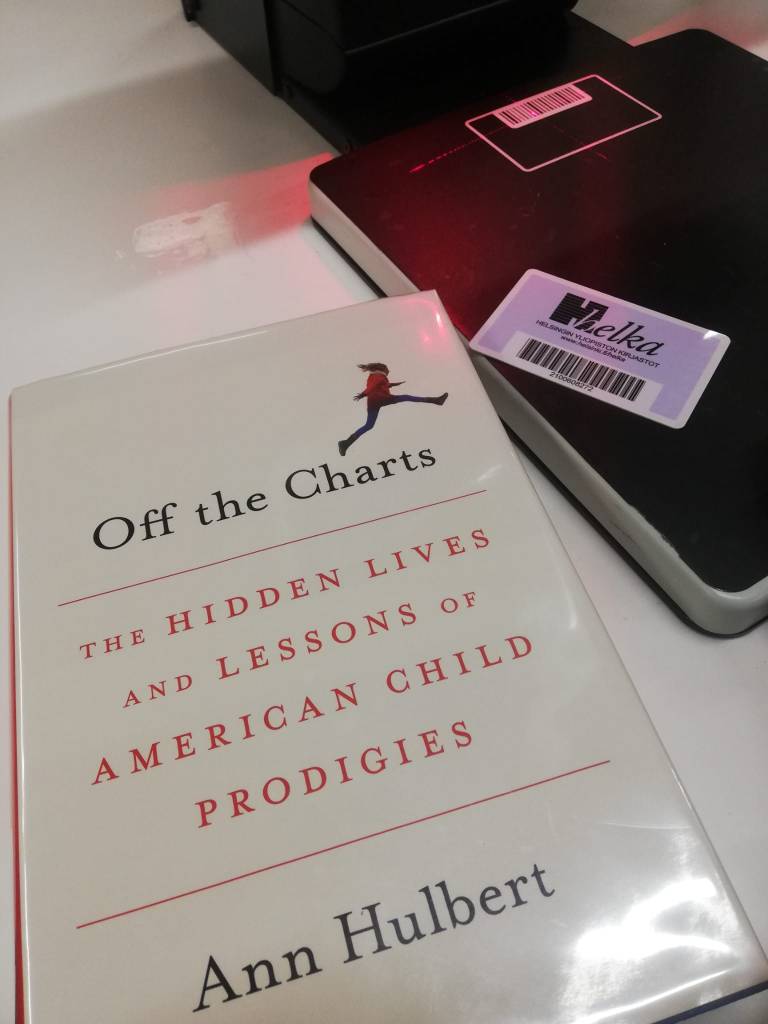
At 17, Marc met with Ann Hulbert, the literary editor of The Atlantic, who discussed him in her book, ‘Off the Charts’. The interview revealed that both Marc and his mum, Chloe, had been battling depression and anxiety. Marc had been candid about his struggles with mental health. This issue may have heavily influenced his decision to abandon his dream of becoming a concert pianist. Nevertheless, he harboured no regrets about his extraordinary childhood experiences. Despite things not progressing as expected, he remained grateful for everything.
Feynman also experienced a brief spell of depression following the deaths of his wife, Arlene, and subsequently, his father. However, the sadness in his personal life did not lead to any significant collapse in his professional life. He appeared to possess the mental resilience necessary to persevere in life. Multiple aspects of Feynman’s life seemed to contribute to a network marked by optimal diversity, redundancy, connectivity, and modularity that enabled resilience. His playful and healthy childhood experiences may have been essential in cultivating his mental resilience in adulthood.
The Idiosyncratic Pathway of Talent Development
Marc discontinued his pursuit of becoming a piano virtuoso, although he continued to attend Berklee College of Music. Now aged 24, Marc divides his time between private music teaching, part-time composing, and his e-sport hobby. His recent presence in the media is almost non-existent, with only remnants from his prodigious childhood period accessible. Though it is premature to draw conclusions, the glamorous life of a concert pianist is no longer part of Marc’s plans. Instead, he seems to relish his relatively anonymous and private adult life.
Meanwhile, “Ritty” Feynman has become one of the most revered scientists in modern history. His name is displayed amongst other laureates in the Nobel Prize Museum in Stockholm. Furthermore, his approach to learning and scientific exploration continues to inspire many, including today’s younger generations who often express, “Feynman, the greatest teacher I never had.”
Both Ritty Feynman and Marc Yu demonstrated exceptional and promising potential in their childhoods. Most would have anticipated both children to become eminent adults within their respective domains. However, their talent development trajectories diverged significantly. Marc’s journey was characterised by a rapid prodigious ascent to stardom, followed by an abrupt departure from the virtuoso pathway in mid-adolescence. In contrast, Ritty’s journey was marked by a playful childhood with less dramatic growth, followed by a meteoric rise in adolescence and such remarkable performances in adulthood that he ultimately achieved eminence. It seems that deliberate play during childhood (as evidenced by Ritty’s story) may favour resilient and sustainable long-term talent development.
Nonetheless, it is challenging to pinpoint which factors most significantly explain their differing talent development trajectories. Excellence is an emergent phenomenon, arising from the interactions of various components: genetics, innate abilities, family upbringing, practice and hard work, access to training and education, social network, geography, culture, and numerous life events. Thus, rather than concentrating on components, this story encourages us to shift our focus to the concept of “interactions” between components. It is evident from the story that we cannot predict whether one will attain eminence in adult life based on a single variable, such as childhood giftedness alone.
Moreover, talent development is non-linear and dynamic across the lifespan, although we may focus on critical periods like early childhood and adolescence when novelty often surfaces. Even a seemingly benign disturbance during critical periods could cause an unexpected shift in one’s life. Particularly striking from this story is how adolescence presents a window of both threat and opportunity; the nature of experiences can establish trajectories and alter their direction, either positively or negatively.
 livalearning