
Helsinki, 02.09.25
As you’re reading this, you’re probably enjoying your second fika of the day. Sipping coffee alongside a Swedish kanelbulle, a Finnish kardemummapulla, or a Norwegian pepperkake, while scrolling through your social media feed. The scent of cinnamon, cardamom, nutmeg and cloves is woven into the fabric of Nordic life, making Christmas smell like a year-long season in every bakery and kitchen.
We know, of course, that these spices do not originate in the North. I want to take you back to history, to my birthplace, the Indonesian archipelago, the original home of nutmeg and clove. For centuries these islands were the epicentre of global trade, wealth and violence.
And then I will bring you back to the 21st century, where the story has shifted from spices to minerals, from cinnamon buns to electric cars, from gingerbread to AI clouds. Because the same islands that flavoured your pastries are now powering your phones, your data centres, your EV, your green transition.
It is often said that in the 16th and 17th centuries, nutmeg and cloves were valued more highly than gold. They grew only in the Banda and Maluku Islands of Indonesia. To control this trade, the Dutch founded the VOC, the world’s first multinational corporation and the first to issue shares on a stock exchange.
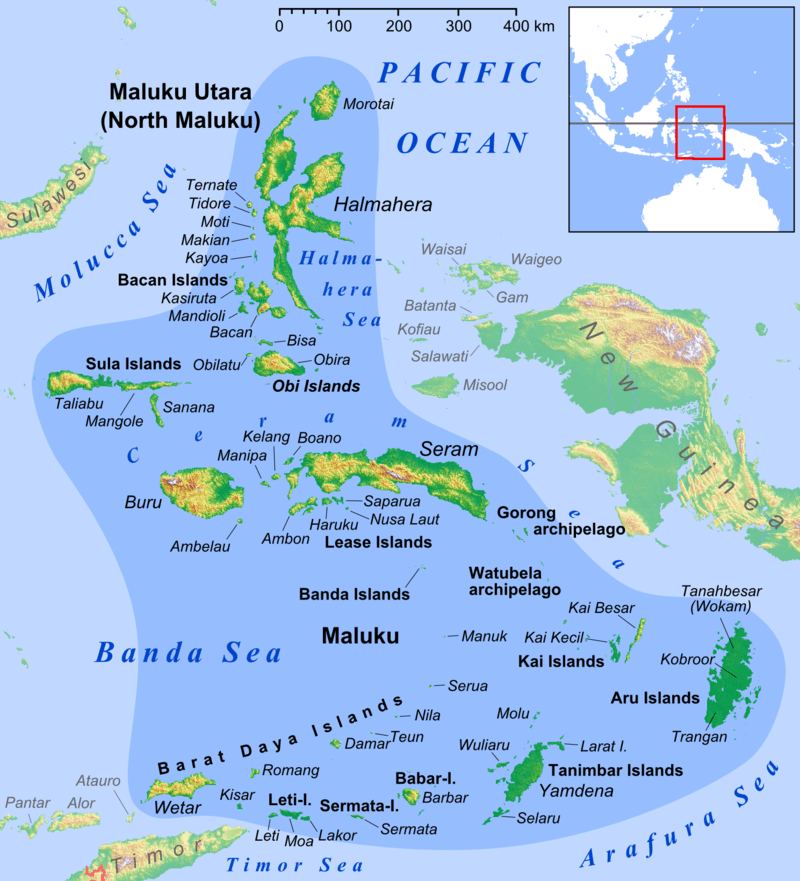
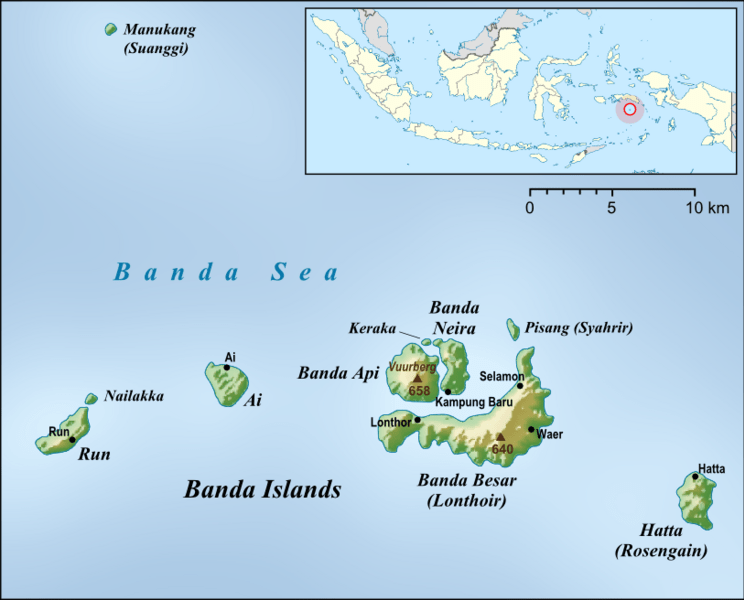
The VOC combined commerce with coercion: in 1621, it massacred most of Banda’s population to secure nutmeg profits. In Maluku, it imposed bloody monopolies on cloves.
Later, under the Treaty of Breda, the Dutch agreed to let the English keep New Amsterdam (soon to be called New York) in return for Run Island, the tiniest of the Bandas but rich with nutmeg. That is how an Indonesian island was once deemed worth the price of Manhattan.
And the Nordics were never outside this system. Denmark founded its own East India Company, modeled directly on the VOC, and Copenhagen’s stock exchange, Børsen, was built to house the profits of this colonial trade.
Sweden launched its East India Company, one of the most profitable ventures in its history, with ships passing through Batavia, smuggling pepper and coffee alongside Chinese porcelain. Gothenburg’s wealth and stock market grew from this trade.
Norway, bound under Danish rule then, supplied what Denmark’s East India trade needed most: sailors and timber. Norwegian men crewed voyages for the Danish East India and Asiatic Companies, and Norwegian oak and pine built the ships that carried nutmeg, cloves, and coffee across the seas.
Finland, under Sweden then, was drawn into the Swedish East India Company’s ventures. Finnish sailors served on expeditions leaving Gothenburg, merchants in Turku invested in its cargoes. When Finland became part of the Russian Empire, Finns continued to consume colonial imports: coffee, sugar, nutmeg, cloves, brought through St. Petersburg as well as through Copenhagen and Gothenburg.
Nordic kitchens, markets, and stock exchanges were in a way shaped by Indonesia’s islands, even if the trade routes passed through imperial centres far away.
Fast forward to 2025, and Indonesia is once again at the centre of global capitalism. The commodities have changed, but the logic has not.
Minerals such as nickel and copper have replaced nutmeg and cloves. Indonesia now produces about half of the world’s nickel, indispensable for EV batteries and renewable energy storage.
It is home to one of the largest copper deposits on earth, wiring wind turbines, power grids and AI data centres.
The U.S. Department of Commerce, on its official website, has stated that Indonesia is expected to supply about a quarter of the world’s critical minerals, much needed for the green transition and the AI revolution.
Every Nordic EV, every offshore wind turbine, every “green” data hub in Hamina or Luleå is somehow tied to Indonesia.
But the cost is borne by ordinary Indonesians. In Morowali, the world’s largest nickel hub, 18 workers died in a furnace explosion in December 2023, with over a hundred killed across nickel facilities in the past decade.
In Halmahera, nearly half of villagers tested carry unsafe mercury in their blood, one in three show dangerous arsenic levels.
In Weda Bay, respiratory illnesses soared from just over 400 cases in 2020 to more than 10,000 in 2023, with babies and elders choking on smelter dust.
On Kabaena Island, toxic sludge has polluted coastal waters and claimed the life of a two-year-old.
And now, as I’m writing this note, Indonesia is in open turmoil. In the past week alone, ten people have died in protests against corruption and oppression.
A 21-year-old motor taxi driver (imagine a Wolt courier delivering food in Helsinki) was crushed by a police tactical vehicle. An 11th grade student, was beaten to death.
Buildings were torched, in scenes hauntingly reminiscent of 1998, when staged riots were used to justify military crackdowns.
Citizens struggle with rising prices and unemployment while parliamentarians unashamedly raise their salaries and pad their perks.
Ironically, around this exact moment, Europe has just given Indonesia’s leaders what they crave. In July 2025, after nearly ten years of negotiations, the EU concluded its Comprehensive Economic Partnership Agreement with Indonesia.
Brussels called it a milestone for sustainable trade. For Jakarta, it was international legitimacy delivered just as the government is currently unleashing batons and tanks on its own citizens.
Just last night, the police raided a university located only a few hundred metres from my mother’s house in Bandung, spraying tear gas and firing rubber bullets into an educational institution.
What does sustainability mean if smelters explode, if seas are poisoned, if babies wheeze from toxic dust, if NGOs are silenced, if student protests are met with tanks?
It means greenwashing authoritarianism.
The Nordics cannot look away. Denmark’s wind giants depend on copper, Sweden’s carmakers and Gothenburg’s battery hub rely on nickel, Norway’s EV fleets and grids need both, and Finland’s refineries and data centres are tied to these chains.
We pride ourselves on clean air, safe water and sustainable energy. But just as nutmeg and cloves once flavoured our pastries through colonial violence, today our “green” transition risks being built on blood nickel and copper.
The Banda and Maluku Islands gave the world nutmeg and cloves, and with them the VOC, the model of modern capitalism.
Today, with nickel and copper, the Indonesian archipelago again stands at the hinge of world history.
Will we in the Nordics enjoy our pastries and our clean technologies while Indonesians face tanks in the streets, or will we demand a just transition, one that is not only green but also fair?
Aliva Sholihat / Department of Digital Humanities / University of Helsinki
 livalearning