
Okay, so now for the second part of my blog post about women’s health in midlife.
Let’s take a flashback to what happened last year. I was in a very stressful situation, trying to finalize my master’s thesis while also preparing for my PhD application.
Towards the end of the year, I suddenly fell ill with severe abdominal pain. I initially thought it was just stomach acid, so I took over-the-counter meds, but nothing worked.
I eventually went to the doctor, who sent me to the ER for tests, suspecting appendicitis or something more serious. After hours in the ER, the doctor concluded I might be experiencing dyspepsia and warned me about the possibility of IBS (Irritable Bowel Syndrome), advising me to monitor it in the coming months and be careful with my diet.
To top it all off, they found a UTI, which I had to treat with antibiotics. I was stunned. I didn’t feel like I had any UTI symptoms, and I thought I was careful with my hygiene. It turned out that the stress I had been under weakened my immune system and threw my body off balance.
This was a wake-up call. Because of the potential IBS diagnosis, I started paying more attention to what I was eating. I read a lot about how maintaining a healthy, diverse gut microbiome could help lower the risk of IBS. A well-balanced gut microbiome supports digestion, immunity, and even mental health.
So earlier this year, I began taking kombucha essence, which is essentially fermented tea that turns into vinegar after fermenting for at least three months. You dilute it in water before drinking. I chose a brand that had been part of a clinical trial at Wageningen University, curious whether it could positively impact my gut microbiome.
https://ctv.veeva.com/study/gut-health-enhancement-by-eating-favourable-food
Here’s the company website ( I am not at all sponsored).
They also have a sister company, whose product I’m currently using. However, their AI and health tech approach feels a bit gimmicky at this stage. I’d suggest waiting to see if their full version of the app is worth trying when it launches.
Hormonal Fluctuations, IBS, and the Gut Microbiome
As I’m turning forty this year, I found myself reading more about women’s health in midlife. I discovered that many women experience IBS during the transition to menopause, and this is often linked to changes in the gut microbiome.
Hormonal fluctuations, especially in estrogen and progesterone, can disrupt the gastrointestinal system. Estrogen plays a role in regulating gut motility and supporting a healthy microbiome. When estrogen levels drop during perimenopause, the gut can become more sensitive, leading to bloating, constipation, or diarrhea—classic IBS symptoms. Stress, which often accompanies perimenopause, can worsen these symptoms by affecting the gut-brain axis.
The Gut-Vagina Axis: A New Revelation
While researching the gut microbiome, I came across something that fascinated me: the gut-vagina axis. It turns out that the gut and vaginal microbiomes are interconnected through the oestrobolome, a group of gut microorganisms responsible for metabolizing estrogen. As estrogen levels fluctuate and decrease during perimenopause, the vaginal microbiome often shifts, with Lactobacillus levels dropping. This change can increase the risk of infections like bacterial vaginosis (BV) and UTIs.
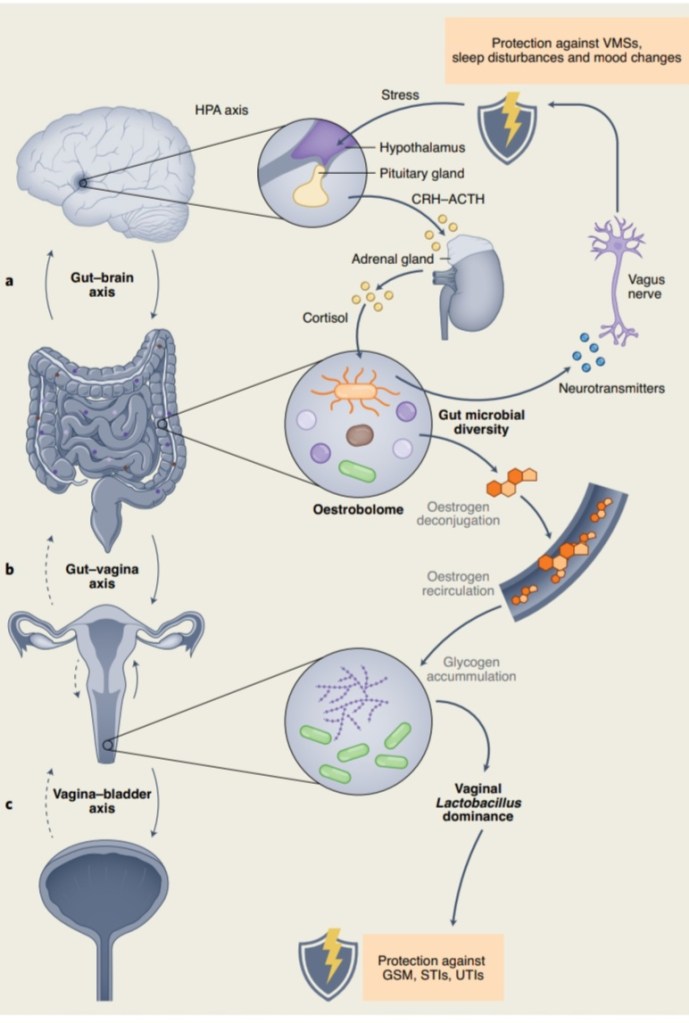
I also learned that the vaginal microbiome is crucial during perimenopause. As estrogen levels decline, the vaginal lining becomes thinner and drier, a condition known as vaginal atrophy. This, combined with a reduction in Lactobacillus levels, can lead to dryness, itching, and discomfort, all of which increase the risk of bacterial infections. Lactobacillus bacteria produce lactic acid, which helps keep the vaginal environment acidic and inhospitable to harmful pathogens. When these bacteria are diminished, the vaginal pH rises, creating a breeding ground for infections.
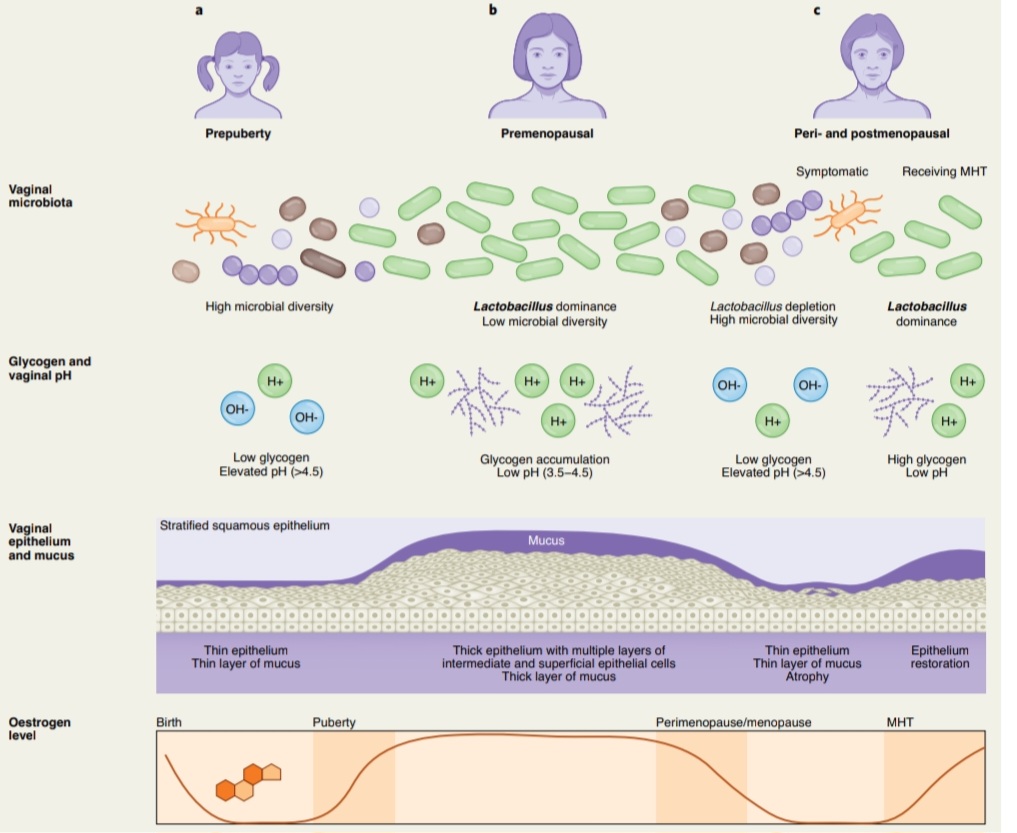
But it’s not just infections that are a concern. A disrupted vaginal microbiome during perimenopause is also linked to an increased risk of cervical cancer. A weakened vaginal lining and the presence of harmful bacteria make it easier for HPV (the virus that causes cervical cancer) to infect the cells of the cervix. Studies suggest that maintaining a healthy vaginal microbiome could help lower this risk by keeping the vaginal environment protective against such pathogens.
This was an eye-opener for me. Like many women, I hadn’t fully realized that maintaining the health of my vaginal microbiome could be so important, not only to avoid uncomfortable infections but also to reduce the risk of more serious health issues as I transition through perimenopause in the years to come.
First Steps in Testing My Microbiome
After about six months of taking kombucha essence daily, I began wondering if it was making a difference. Subjectively, I noticed improvements in my bowel movements (though they still depended heavily on my fiber intake). Thankfully, I haven’t experienced any abdominal pain recently, except for the occasional bloating after indulging in fatty foods like lamb stew or too much pizza 😁. As for my mental health, I’m still managing the stress of my PhD program, but I feel like I’m coping. There are definitely off days, but when I stick to a routine of rest and exercise, I generally feel okay. No major breakdowns so far 😅.
Curious about my microbiome health, I decided to take an at-home test, starting with a vaginal microbiome test. It seemed more convenient, all it required was a light swab, which I sent to the lab. I figured that if my vaginal microbiome was in good shape, my gut microbiome might also be somewhat healthy.
I think it’s important to share my experience with the vaginal microbiome test, even though topics like this can be uncomfortable for some people. Women’s health, particularly around periods and vaginal health, is often a taboo subject.
Like many women, I wasn’t aware of the connection between the vaginal and gut microbiomes until recently. Despite regularly visiting my Ob-Gyn and having two kids, I was never fully educated about how these systems interact, or how perimenopause might impact my microbiome.
So, let’s consider this part of a constructive conversation. This is about education, not me seeking attention.
Thankfully, the test results showed Lactobacillus dominance, which is a good thing!
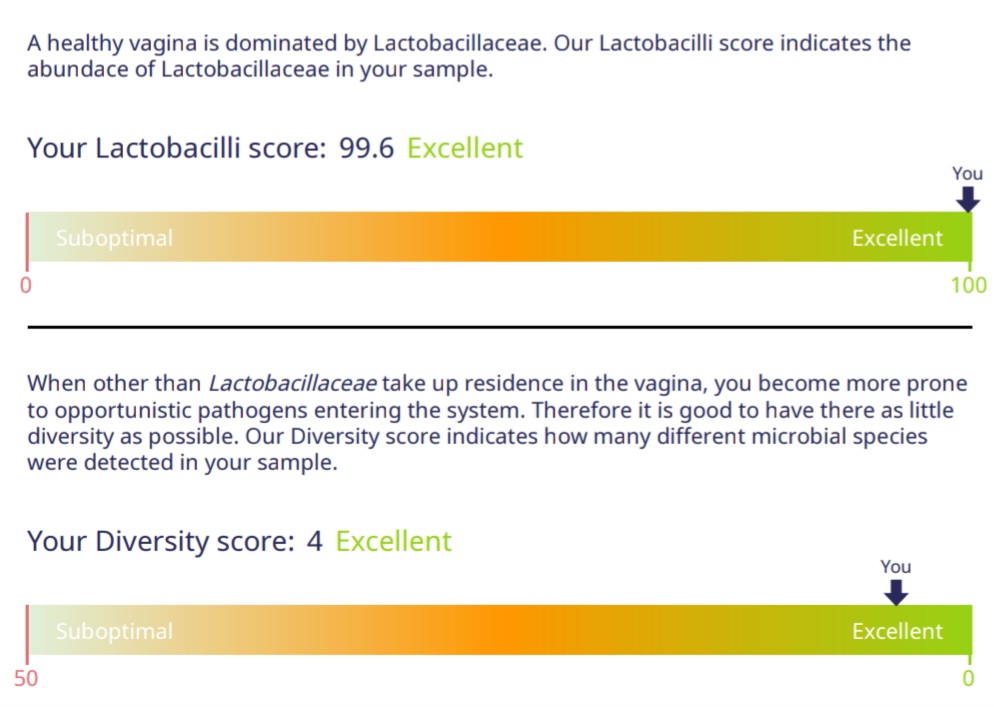
But, as is typical for women in midlife, there’s another news that wasn’t entirely perfect. Here’s why.
The vaginal microbiome can be divided into several community types:
Type I: Dominated by Lactobacillus crispatus, associated with low health risks.
Type II: Dominated by Lactobacillus gasseri, also linked to low health risks.
Type III: Dominated by Lactobacillus iners, considered healthy but linked to a higher risk of BV and UTIs.
Type IV: A diverse community not dominated by Lactobacillaceae, often associated with BV.
Type V: Dominated by Lactobacillus jensenii, linked to low health risks.
I fell into Type III, which is common for women going into the journey of perimenopause. Lactobacillus iners is considered a neutral bacterium. It helps protect against harmful pathogens but isn’t as effective as Lactobacillus crispatus or Lactobacillus gasseri.
It’s also somewhat unstable, think of it as someone easily influenced by their environment. If they’re surrounded by positivity, they’ll act well, but if they encounter negativity, they might not hold up. Ideally, you’d want to be in Type I or Type II, where the protection is stronger. Being in Type III means I need to be extra careful with my lifestyle choices to maintain balance.
The vaginal microbiome test was useful because it provided a detailed report of the species present (which I didn’t display here). If a specific pathogen had been found, I would’ve been able to take targeted action, especially helpful for women dealing with recurrent BV. Knowing exactly what’s going on allows for more effective treatment, whether through antibiotics or probiotics.
This experience has taught me a lot about the importance of both gut and vaginal microbiome health, especially during midlife. Your microbiome plays a crucial role in how your body functions. Taking control of your microbiome health is one of the most proactive things you can do to ensure a smoother transition through perimenopause and into midlife.
Taking more fermented foods like kombucha works for me, but it might not work for everyone. It’s about finding what works best for you to keep your microbiome axes healthier.
 livalearning