
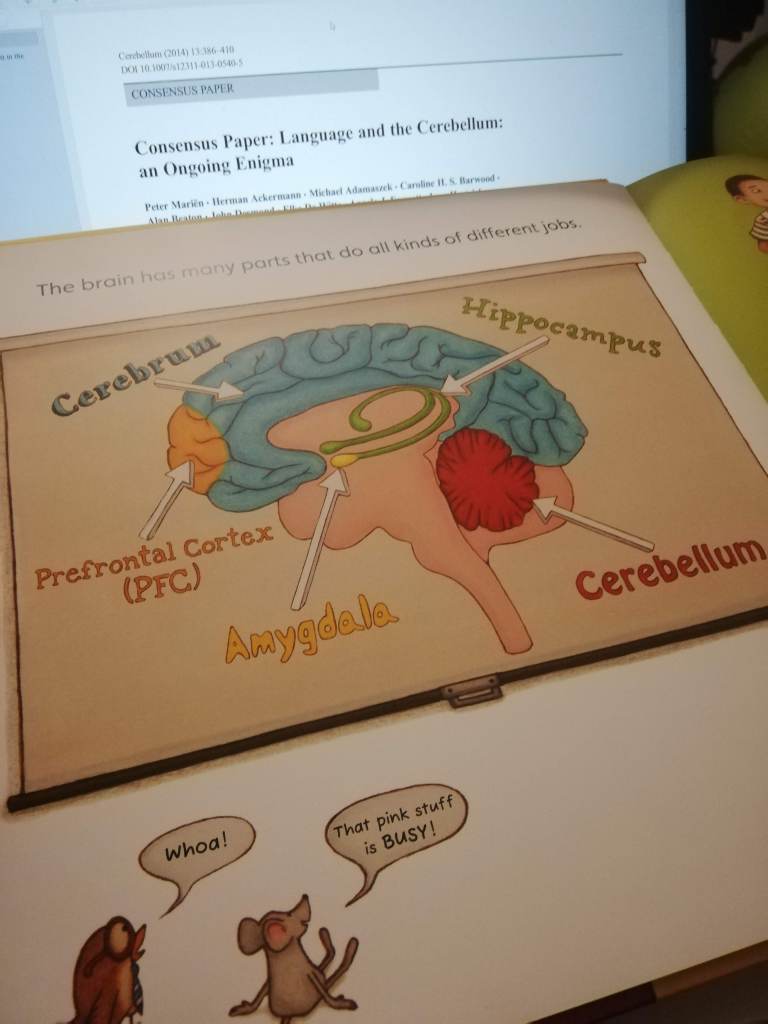
Humans are distinguished from other animals in numerous aspects of cognition, such as the development of language, utilization of complex tools, reliance on intricate social institutions, and the practice of cultural transmission. Comparative evolutionary neuroscience has primarily focused on the neocortex to investigate the factors behind humankind’s unique cognition. However, recent findings have started to emphasize the significant role of the cerebellum in the evolution of human cognition.
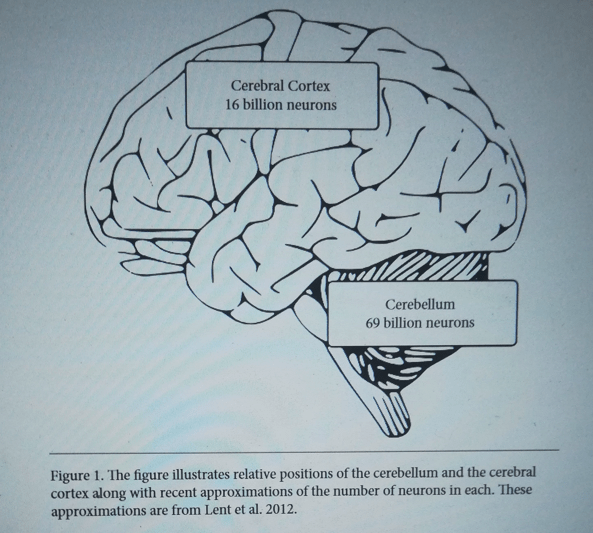
Humans have deviated notably from the evolutionary trend for the neocortex and cerebellum to evolve in tandem, resulting in a considerably larger cerebellum-to-neocortex size ratio than other primates [1]. Intriguingly, the cerebellum constitutes only around 10% of the human brain’s volume but houses approximately 80% of the total 86 billion neurons [2]. These remarkable facts alone warrant a thorough investigation. What are the plausible explanations behind this evolutionary development? Exciting line of research has begun to uncover the extensive functions of the cerebellum and may shed light on the ultimate question: what makes us so peculiarly human?
Cerebellum: Intersection of Genes and Culture
The dual inheritance view posits the co-evolution of genes and culture as the primary explanation behind humankind’s distinct cognition. However, this paradigm needs to address the timeline mismatch between genetic evolution, which spans millions of years, and cultural evolution, which occurs rapidly. Epigenetics, involving dynamic alterations in gene expression through DNA methylation and protein modification, may provide some answers. Recent findings reveal that distinct epigenetic features are more evident in the human cerebellum than in the previously acknowledged prefrontal cortex area [3].
Greater human-specific methylation in the cerebellum may reflect evolved neurobiological differences crucial for specific human cognition, such as language, complex tool use, and the practice of cultural transmission. Furthermore, distinct human epigenetic features in the cerebellum were found in genes associated with neurodevelopment, which may relate to human-specific synaptic plasticity known to be altered in humans. These epigenetic differences may offer clues to the biological underpinnings of human-specific cognition and argue for the vital role of the cerebellum in the evolution of human cognition [3].
As more evidence emerges regarding the cerebellum’s role, the notion of the neocortex as the pinnacle of evolutionary achievement may be losing ground [1, 4]. This new paradigm could have substantial philosophical and theoretical implications for our understanding of cognition. Cortico-centric models, the enduring distinction between thinking and movement, and the dualistic concept of mind and body may all confront significant challenges. For example, Barrett et al. advocate for the embodied social brain hypothesis, which posits that primate brain and social evolution are rooted in the body and action, rather than in the mind and meta-representations [4]. The contemporary influence of the 4E cognition paradigm has shifted the conventional understanding of cognition as the computation of mental representations occurring solely within the brain. Instead, with the brain’s primary function presumed to be controlling the body, cognition is now perceived as embodied and dynamic adaptive control processes in (partially) unpredictable environments [1, 4, 5].
Cerebellum: The Predictive Brain’s Hub
In network and complexity science, connector hubs play a crucial role as they enable different nodes to interact effectively and efficiently, exchanging information and resources. Recent findings suggest the existence of functional hubs converging in the cerebellum [5]. These connector hubs in the cerebellum are linked with core neurocognitive networks in the cortical area, such as the default mode, executive control, and salience networks. Emerging evidence indicates that these cortico-cerebellar networks are critical for the brain’s ability to control and organize complex sequences involved in technical skills, social learning, and, ultimately, language use [1]. Moreover, recent studies propose that connector hubs in the cerebellum are essential for transmitting control signals and performing signal comparisons from connected networks to make prediction error adjustments. This argument aligns with evidence on the cerebellum’s role in creating the brain’s internal models, vital for dynamic agent/environment interactions. Thus, these findings converge on the idea that the cerebellum should be considered the primary hub of the predictive brain.
Cerebellum: A Nexus for Convergence Science
Looking back at the history of evolutionary theory, Darwin’s lesser-known collaborator, Alfred Russel Wallace, dedicated nearly a decade to researching the Indonesian archipelago [6]. Wallace’s observations of flora and fauna across various islands led him to introduce the concept of “island biogeography,” positing that certain islands could serve as “hubs” for the evolution of new species. These island hubs featured unique ecological conditions that could act as catalysts driving evolutionary processes. Wallace’s concept of biogeography inspired him to draw the imaginary Wallacean line between the islands of Bali and Lombok, which assisted him in formalizing his version of evolution by natural selection. Examining Wallace’s work demonstrates that “hubs” have consistently been a focal point in diverse types of complex networks, as they may reveal groundbreaking insights.
The cerebellum holds the potential to be this “intellectual hub” where various scientific fields can approach it from different perspectives. Notably, the cerebellum presents a fascinating subject for interdisciplinary fields such as cognitive science. With the cerebellum as the central hub, insights from biology, neuroscience, psychology, philosophy, and anthropology can be integrated to provide a more meaningful explanation for the uniqueness of human cognition. Future research will determine whether we can unravel the enigma of the cerebellum: the “little brain” that may possess the key to the evolution of human cognition.
References
- Barton, R. A. (2012). Embodied cognitive evolution and the cerebellum. Philosophical Transactions of the Royal Society B: Biological Sciences, 367(1599), 2097–2107.
- Lent, R., Azevedo, F. A. C., Andrade-Moraes, C. H., & Pinto, A. V. O. (2012). How many neurons do you have? Some dogmas of quantitative neuroscience under revision: Neuroscience dogmas and brain cell numbers. European Journal of Neuroscience, 35(1), 1–9.
- Guevara, E. E., Hopkins, W. D., Hof, P. R., Ely, J. J., Bradley, B. J., & Sherwood, C. C. (2021). Comparative analysis reveals distinctive epigenetic features of the human cerebellum. PLOS Genetics, 17(5), e1009506.
- Barrett, L., Henzi, S. P., & Barton, R. A. (2021). Experts in action: Why we need an embodied social brain hypothesis. Philosophical Transactions of the Royal Society B: Biological Sciences, 377(1844), 20200533.
- Gatti, D., Rinaldi, L., Ferreri, L., & Vecchi, T. (2021). The Human Cerebellum as a Hub of the Predictive Brain. Brain Sciences, 11(11), Article 11.
- Wallace, A. R. (2008). Malay Archipelago. Tuttle Publishing.
(aliva.sholihat@helsinki.fi)
 livalearning